Nursing Degree Loading Tee: A Designer’s Embroidery Review
As an embroidery designer who has spent years digitizing patterns and testing them on everything from stiff canvas to delicate jersey knits, I approach every new design with a critical eye. We are not just looking for pretty pictures; we are looking for stitchability, durability, and market appeal. Recently, I evaluated the Nursing Degree Loading Future Nurse Tee design, a piece categorized under Print Templates and Graphics, to determine its viability for real-world machine embroidery projects. This review breaks down how this inspirational quote design translates from a digital file to a tangible, stitched product.
First Impressions and Visual Personality
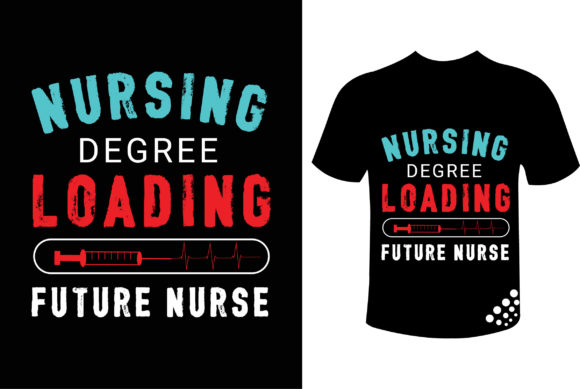
The first thing that strikes you about the Nursing Degree Loading Future Nurse Tee is its timely relevance. The "loading" motif is a staple in modern graphic design, appealing directly to nursing students who are in the thick of their studies. Visually, the layout suggests a blend of technical progress bars with soft, encouraging typography. For an embroiderer, this mix presents both an opportunity and a challenge. The clean lines of a loading bar contrast nicely with the organic flow of thread, but the success of the design hinges entirely on how well the text is rendered.
In terms of mood, the design feels motivational and professional. It is not overly cutesy, which makes it versatile. It fits comfortably within the aesthetic of boutique scrubs, study hoodies, and clinical accessories. When I look at the provided assets—specifically the high-resolution PNG at 4500×5400 pixels at 300 dpi—I can see the potential for crisp edges. However, as embroidery professionals know, a sharp PNG does not guarantee a clean stitch-out. The vector files included, such as the Ai File, EPS File, and SVG File, are crucial here. They allow us to inspect the paths and potentially redraw elements if the auto-digitizing process creates unnecessary nodes or jagged curves.
Real-World Application: The Custom Sweatshirt Scenario
To truly test the value of this design, I imagined a specific client project: a custom order for a group of nursing students graduating in the spring. The request was for matching sweatshirts that could be worn during study sessions and casual outings. This is where the Nursing Degree Loading Future Nurse Tee shines as a concept. Sweatshirts provide a stable, medium-weight fabric that handles embroidery well, offering enough loft to hide minor stitching imperfections while providing a premium feel.
For this application, I would likely scale the design to fit a 5x7 hoop or larger, ensuring the text remains legible. The "loading" graphic offers a great opportunity to play with thread textures. A satin stitch could define the borders of the progress bar, giving it a glossy, finished look, while a fill stitch might be used for any solid background elements if the design permits. The quote itself, being the focal point, would require careful attention to stitch density. If the letters are too small, they may turn into a blob of thread after washing. If they are too large, the garment might pucker. This balance is why having access to the editable source files like the PDF file and vector formats is essential for a professional workflow.
Fabric Considerations and Stitching Challenges
While the design is strong on paper, its performance on fabric requires strategic planning. One major consideration is the fabric texture. If you are applying this as a tote bag design on heavy canvas, the stitch density needs to be higher to cover the weave of the fabric. Conversely, if you are using it for baby embroidery on a soft onesie, you must reduce the pull and use a lightweight stabilizer to prevent discomfort against sensitive skin.
Dark fabrics present another hurdle. The Nursing Degree Loading Future Nurse Tee likely relies on contrast for readability. If stitching on navy or black scrubs, you will need high-contrast thread colors, such as white, silver, or bright medical blue. I always recommend running a test stitch-out on scrap fabric of the same type and color before committing to the final garment. This allows you to check thread color contrast and ensure that the small details, like the end of the loading bar or the dots in the ellipsis, do not get lost.
Curved surfaces, such as caps or hats, require extra caution. The flat nature of a "loading" bar might distort if not hooped perfectly straight. For cap embroidery, I would suggest simplifying the design or reducing the width to fit the front panel without wrapping around the sides. Additionally, textured fabrics like terry cloth towels or waffle-knit aprons can swallow up fine details. In these cases, using a topping stabilizer can help the needle penetrate cleanly without pushing the fabric down into the stitches.
Commercial Viability for Etsy Sellers and Craft Businesses
For Etsy sellers and small shop owners, the commercial potential of this design is significant. Nursing is a evergreen niche with a constant influx of new students. Products featuring this design could range from personalized gifts for graduation to everyday custom apparel for clinical rotations. The key to success here is presentation. Since the product includes a Jpeg File and high-quality PNGs, these can be used to create realistic printable mockups for your online store listings. Showing the design on a model wearing a cozy sweater or holding a coffee cup helps buyers visualize the finished product.
However, licensing is a critical factor. While the product description mentions "Possible and easy change," it does not explicitly state the commercial license terms for the embroidery file itself. Before selling finished items or digital embroidery files derived from this artwork, you must confirm the licensing agreement. Many designers allow the sale of physical handmade products but restrict the resale of the digital file. Always clarify this to protect your craft business from legal issues.
Technical Notes for the Embroiderer
From a technical standpoint, here are my recommendations for working with this design:
- Stabilizer Selection: Use a cut-away stabilizer for stretchy fabrics like t-shirts and jerseys to prevent distortion over time. For woven fabrics like aprons or pillow covers, a tear-away stabilizer may suffice.
- Thread Choice: Polyester threads are ideal for items that will be washed frequently, such as scrubs and kitchen towels, due to their colorfastness and durability. Rayon offers a nicer sheen for decorative items like holiday gifts or nursery decor but may fade faster with harsh detergents.
- Hoop Size: Confirm the optimal hoop size by checking the dimensions in the SVG or Ai File. Do not assume it fits a standard 4x4 hoop without measuring. Scaling down too much can ruin the legibility of the text.
- Detail Inspection: Zoom in on the vector files to check for overlapping paths or open nodes. Clean up any issues in your digitizing software before sending the job to the machine.
Final Verdict on Design Assets
The Nursing Degree Loading Future Nurse Tee is a solid addition to a designer’s library of Print Templates and Graphics. Its strength lies in its relatability and clean, modern aesthetic. While it requires careful handling regarding stitch density and fabric choice, the inclusion of multiple file formats (Ai, EPS, SVG, PDF, PNG, Jpeg) provides the flexibility needed for professional customization. Whether you are creating a single personalized gift for a friend or stocking your small shop with best-selling nursing apparel, this design offers a strong foundation. Just remember to test, stabilize, and verify your licensing, and you will produce a high-quality embroidered item that resonates with your customers.